Alaçatı old town walk: things to see, stone houses, windmills and photo spots
Things to see in Alaçatı on foot: a walk through the old town's stone houses and bay windows in Hacımemiş, Pazaryeri Mosque, Kemalpaşa Street and the windmills on the hill, with the best light for photos.
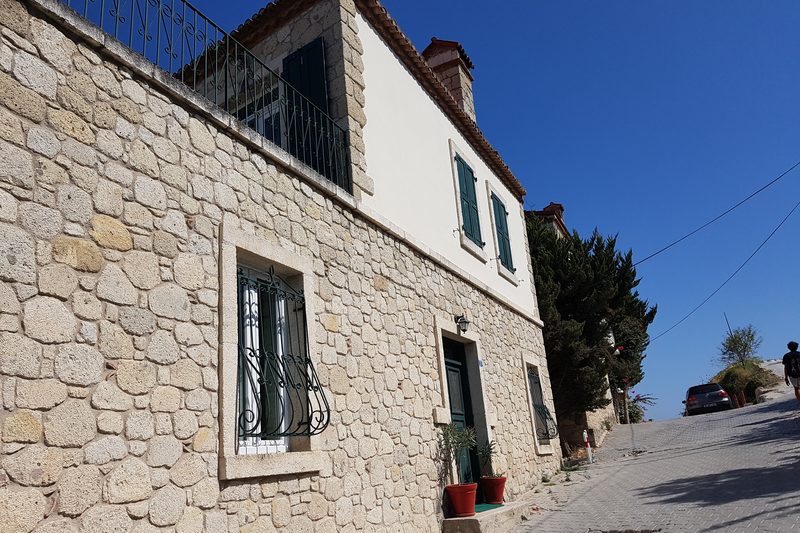
The top three things to see in Alaçatı are all on foot: the stone windmills on the hill, the old stone houses with bay windows (cumba) around Hacımemiş and Kemalpaşa Street, and Pazaryeri Mosque, built in 1874 as the church of Ayios Konstantinos. They lie close together, and the Alaçatı old town is protected as an urban conservation site. The route below is the order we suggest to our own guests: start in the cool of the morning, end at the windmills at sunset.
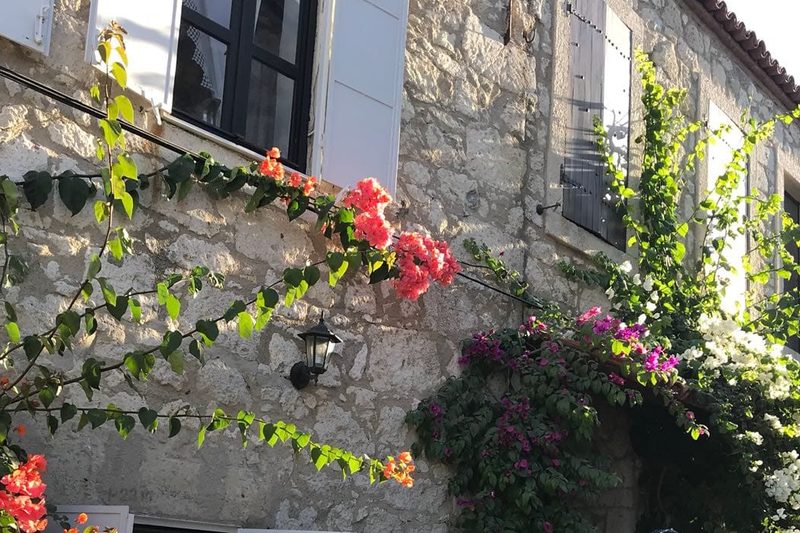
Begin in Hacımemiş in the morning. From Hacı Memiş Mosque on Mithatpaşa Street, wander into the side lanes: two-storey houses of local stone, narrow streets, small squares and old street wells. Bay windows, painted doors and shutters and bougainvillea spilling over walls look softest in early light, and the lanes are still quiet. We tell the history of the quarter and of Alaçatı in our essay 'Hacımemiş and the history of Alaçatı', so we won't repeat it here.
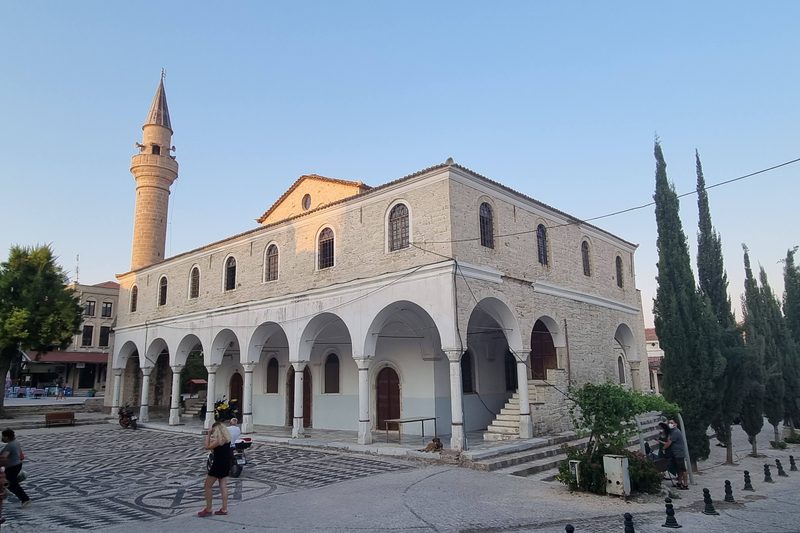
Then walk to Pazaryeri Mosque on Sakarya Street. It was built in 1874 as the church of Ayios Konstantinos and later became a mosque; the iconostasis survives and the courtyard floor is a pebble mosaic. It is a working mosque: go in quietly, outside prayer times and dressed modestly. From there cross to Kemalpaşa Street, the town's main artery, calm by day and busy after sunset. The whole route, with stops for photos, is in our view an easy walk of an hour or two.
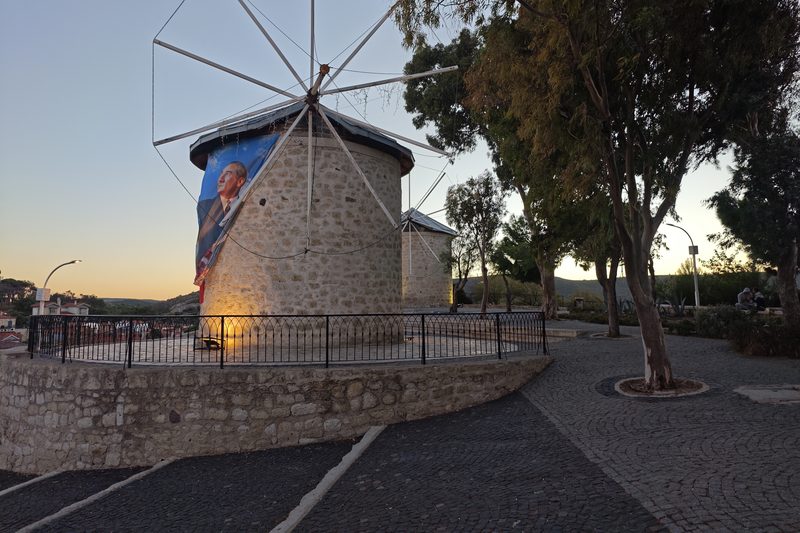
Towards sunset, climb to the windmills on the hill. These stone mills date from the 1850s, are the town's symbol and are among its oldest buildings; from the top you look out over the rooftops. Our advice for photos: early morning for the lanes, late afternoon for the windmills. Midday sun throws hard shadows across the stone walls.
The 'Greek-style town' image is not decoration but history: Alaçatı was largely a Greek (Rum) town until the population exchange of 1923, and Greek master builders put up most of the stone houses. But these houses are of local stone, not whitewash. One request: people live in them. Doors, doorsteps and front steps are private, so please don't sit on them or block them for a pose, and ask before photographing people or their windows.
Places
Photo: Justinianus, CC BY-SA 4.0 (cropped), Wikimedia CommonsHacımemiş quarter · One of the quietest corners of the old town, with stone houses, bay windows and narrow lanes under bougainvillea; best walked in morning light. Open in Maps ↗
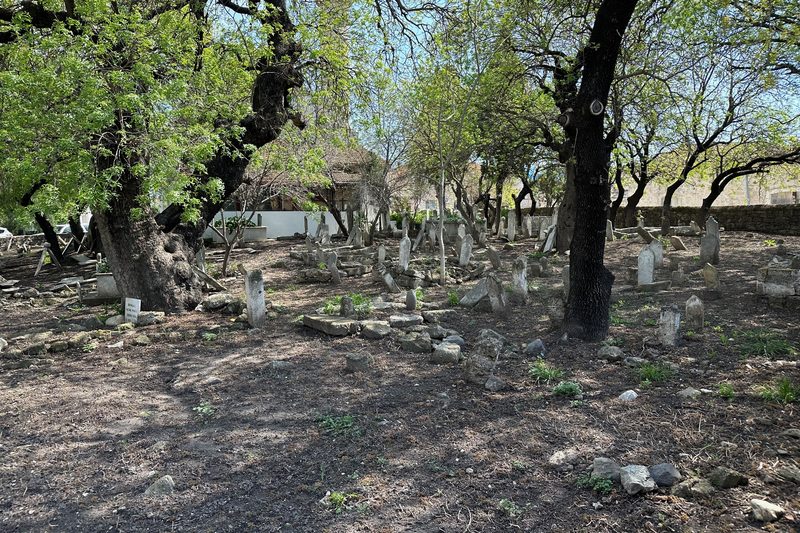
Photo: BSRF, CC BY-SA 4.0 (cropped), Wikimedia CommonsHacı Memiş Mosque (Hacı Memiş Camii) · The historic mosque on Mithatpaşa Street bears the name of Hacı Memiş, after whom the quarter is named, with an old tree-shaded graveyard beside it. Open in Maps ↗
Stone houses with bay windows (Alaçatı Urban Protected Area) · Two-storey Greek and Turkish houses of local stone, with bay windows and painted shutters, in the protected old town.
Photo: Eudessa, CC BY-SA 4.0 (cropped), Wikimedia CommonsPazaryeri Mosque (Pazaryeri Camii) · Built in 1874 as the church of Ayios Konstantinos and now a mosque, with its iconostasis and pebble-mosaic courtyard preserved. Open in Maps ↗
Kemalpaşa Street (Kemalpaşa Caddesi) · The town's main street: quiet by day, at its liveliest in the evening and at night. Open in Maps ↗
Photo: Satirdan kahraman, CC BY-SA 4.0 (cropped), Wikimedia CommonsAlaçatı windmills (Alaçatı Yel Değirmenleri) · Stone windmills from the 1850s looking down on the town from the hill; the last stop of the walk, for sunset. Open in Maps ↗